Zendesk vs. Salesforce
The Zendesk Resolution Platform is an AI-first service solution designed to deliver unparalleled time-to-value. In contrast, setting up Salesforce Service Cloud comes with unnecessary complexity, and requires significant technical overhead that delays ROI. Start your Zendesk free trial today and see why so many brands choose Zendesk as their trusted service partner.
最後更新: July 7, 2026
Why companies are switching from Salesforce to Zendesk
As of June 2026, Salesforce has announced its intent to acquire Fin (Intercom).
Having grown through endless acquisitions, Salesforce has evolved into an end-to-end CRM platform that leaves customers fighting to get value. Teams using Service Cloud frequently encounter complexity fatigue: long implementation cycles, high administrative overhead, and ongoing developer reliance. This drives up the total cost of ownership (TCO) and slows down time-to-value.
Zendesk was purpose-built for service from day one with a focus on the customer experience. With 19 years of service history and 100,000+ customers worldwide, our AI, data models, workflows, and knowledge graph are built upon real support requests and actual resolutions. That means faster time to value and lower TCO.
At Zendesk, we believe getting to real resolutions quickly and accurately is critical. To make this possible, modern AI-first service must encompass the following core elements:
- Trusted: Grounded in transparency and reliability
- Precise: Purpose-built for service excellence leading to fast time to value
- Guided: AI that takes action and works from day one
- Unified: One platform for all of your channels, agent types, and service models
1. Trusted: Grounded in transparency and reliability
Zendesk empowers service leaders to move at the speed of customer expectations and deliver outcomes that earn lasting trust. We back that promise with 99.9% uptime, industry certifications (SOC 2, ISO 27001), and predictable, industry-leading pricing that aligns with resolutions, not activity.
With Salesforce, customers are forced to deal with a complex AI pricing model focused on activity and consumption, not resolutions. Capabilities that service teams consider standard, like WhatsApp, SMS, and Chat channels, are add-ons or locked in higher tiers. As teams address core needs, added costs accumulate, complicating budget management and eroding trust over time.
2. Precise: Purpose-built for service excellence leading to fast time to value
Zendesk delivers service-first tools that work out of the box. Features like automatic categorization of incoming tickets by topic and skills-based routing are built in and don’t require heavy customization. That’s why companies achieve 53.7% faster implementation with 90% of Zendesk customers delivering value in under eight weeks (Nucleus Research). Meanwhile, Salesforce projects often span months or even years.
Salesforce Service Cloud takes a ‘customization-first’ approach which often leads to fragmented experiences and technical debt. Many G2 reviewers cite complexity and the steep learning curves as ongoing challenges.
3. Guided: AI that takes action and works from day one
Zendesk’s AI is trained on over 18 billion service interactions. Our service-first AI works on day one, providing real-time guidance, suggesting next steps, and generating automatic summaries instantly. From AI agents to QA and analytics, Zendesk covers the whole CS journey. Service isn’t a secondary focus—it’s precisely what Zendesk’s AI Resolution Platform was built for.
By contrast, deploying Salesforce Agentforce is a multi-layered enterprise infrastructure project. To reach 'day 1' utility, organizations must first navigate the high operational complexity of Data 360, a process requiring specialized technical teams to manage data ingestion, identity resolution, and complex mapping.
4. Unified: One platform for all of your channels, agent types, and service models
Zendesk is built on a single, native platform where AI, ticketing, QA, and Workforce Management (WFM) work together seamlessly. Analysts consistently rank Zendesk higher for time-to-value because it allows organizations to launch new brands or channels in days, not months.
Salesforce operates across multiple 'clouds' and acquired products, often requiring additional integration and navigation across data silos. This fragmented architecture slows execution and increases operational complexity.
More in this guide:
- Service must-haves: Zendesk, the enterprise-ready solution
- Zendesk vs. Salesforce: Features comparison
- From Salesforce to Zendesk: The customer perspective
- Zendesk vs Salesforce pricing
- Frequently asked questions
- Choose simplicity. Choose speed. Choose Zendesk.
Service must-haves: Zendesk, the enterprise-ready solution
|
Service must-haves |
Zendesk |
Salesforce |
|
Trusted |
Predictable, transparent pricing |
Complex ‘consumption-based’ and add-on pricing |
|
Research and development budget is dedicated to service |
Generalist approach where focus is split across a broad solution suite (sales, marketing, commerce, Slack, etc) | |
|
Managed by service leaders; no dev team required |
Requires dedicated Admins and Developers for even small changes | |
|
Precise |
Fast implementation (weeks) |
Long implementation cycles (months/years) |
|
AI agents purpose built for handling service needs, like triage, routing, and complex flows |
Agentforce is designed as a horizontal platform and requires extensive customization | |
|
Native, service-specific reporting out of the box |
Complex reporting, requiring training and add-ons | |
|
Guided |
AI pre-trained on 18B+ service interactions |
AI needs to be trained and requires building logic and mapping data |
|
topic and sentiment detection built in |
Requires custom configuration and flow logic | |
|
Native Quality Assurance |
No native QA; requires 3rd party tools | |
|
Unified |
Customizable, single, intuitive workspace designed for agent high-speed resolution |
Workspace is fragmented and often leads to ‘swivel chair’ experience across clouds |
|
True omnichannel - voice, chat, email, social, WhatsApp, and more |
Reliance on add-ons and third party vendors | |
|
Native workforce management which autonomously optimizes staffing and adjusts for fluctuations |
Lack of native functionality and reliant on third-party vendors |
Zendesk vs. Salesforce: Features comparison
AI agents and automation
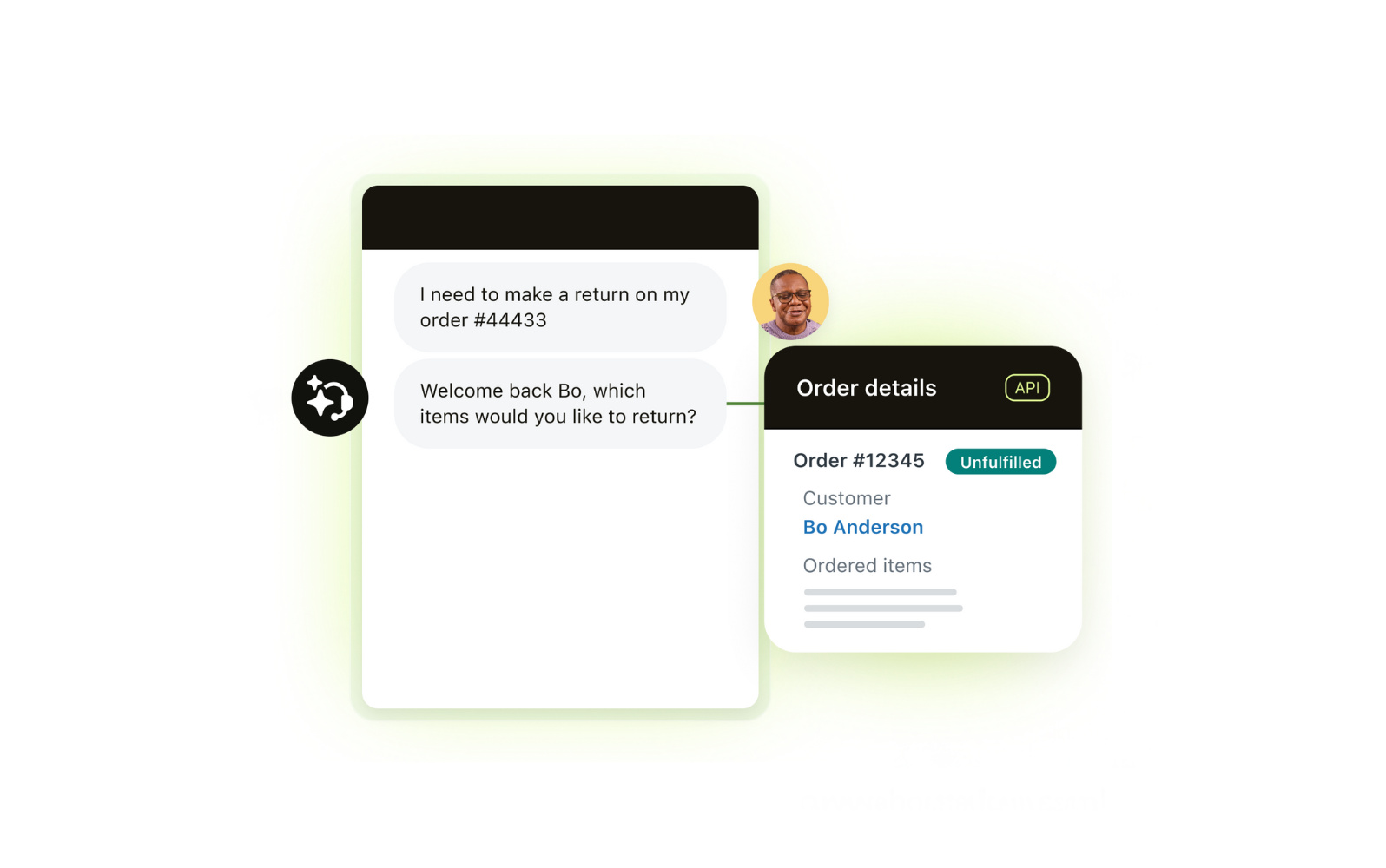
Zendesk’s AI agents are trained on over 18 billion interactions and can resolve up to 80% of interactions autonomously across 80+ languages. Quick to deploy and scale, these multifunctional AI agents drive faster ROI with resolution-based pricing.
Salesforce's Agentforce requires extensive configuration, dedicated admin resources, and often custom development to achieve the same autonomy. Teams that want AI to work on day one choose Zendesk.
See the future of customer service with Zendesk’s AI agents.
AI deployment and time-to-value

Zendesk AI is built into the service workflows teams already use, from knowledge and routing to QA and analytics. This reduces the setup required to move from AI purchase to measurable outcomes. Teams can deploy, govern, and optimize AI inside one connected service platform.
Salesforce offers powerful AI capabilities, but deployment often depends on broader CRM architecture. Teams may need to connect data sources, configure workflows, define governance, and build custom logic before realizing value. Buyers should assess AI readiness by deployment speed, workflow orchestration, governance, and ongoing optimization.
Agent experience
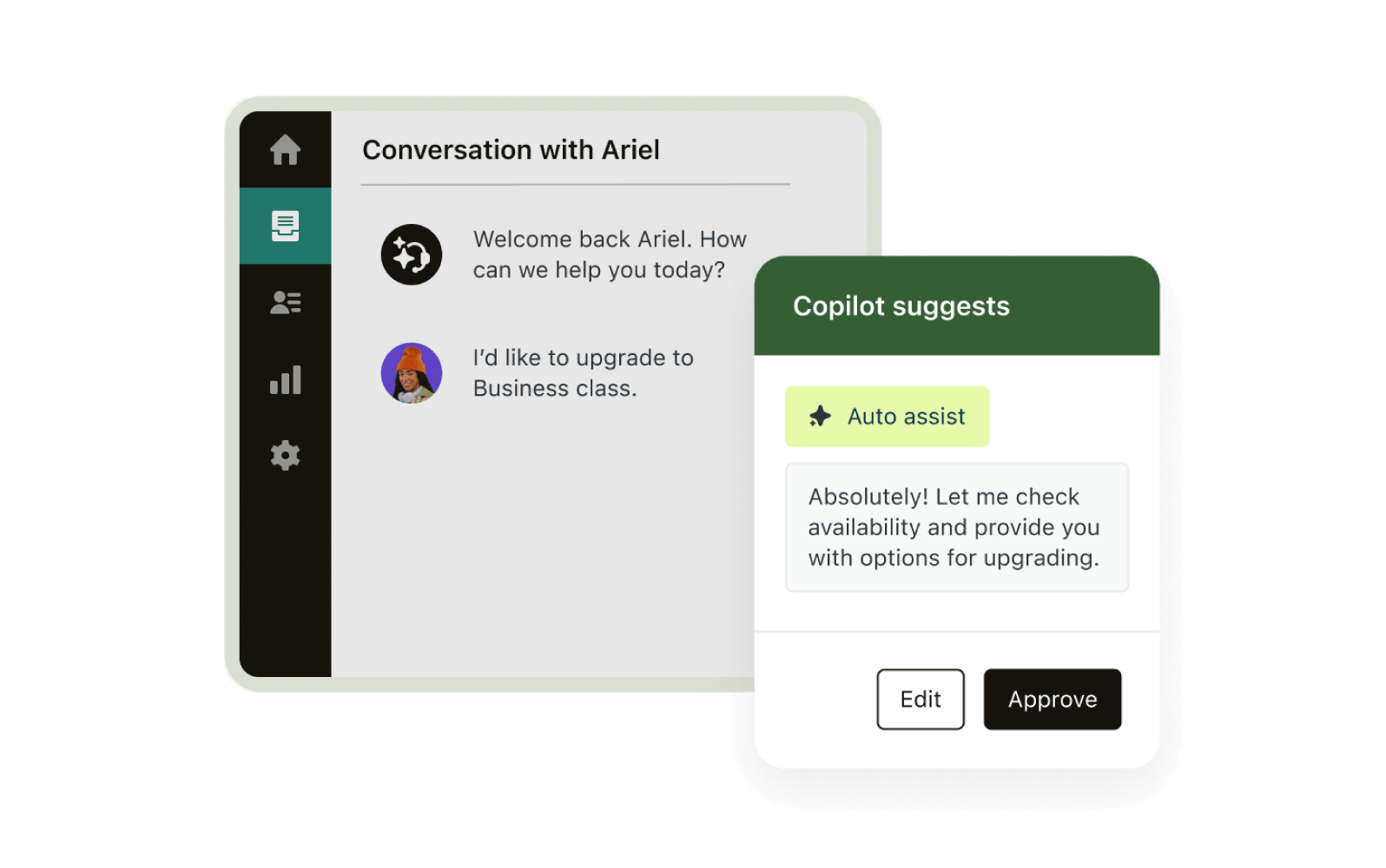
Zendesk’s Agent Workspace is a centralized interface where agents never have to leave a ticket to handle a call, respond to a DM, or consult a teammate. Copilot assists agents in real time while AI agents resolve issues autonomously, letting human agents focus on high-stakes conversations with full customer context at their fingertips.
Salesforce’s Agent console is said to be “cluttered” by G2 reviewers, hindering user adoption and overall user experience. Agents often struggle with a cluttered UI designed for sales data, leading to ‘click fatigue’ and slower resolution times.
Experience intelligent CX with Zendesk AI.
Omnichannel support
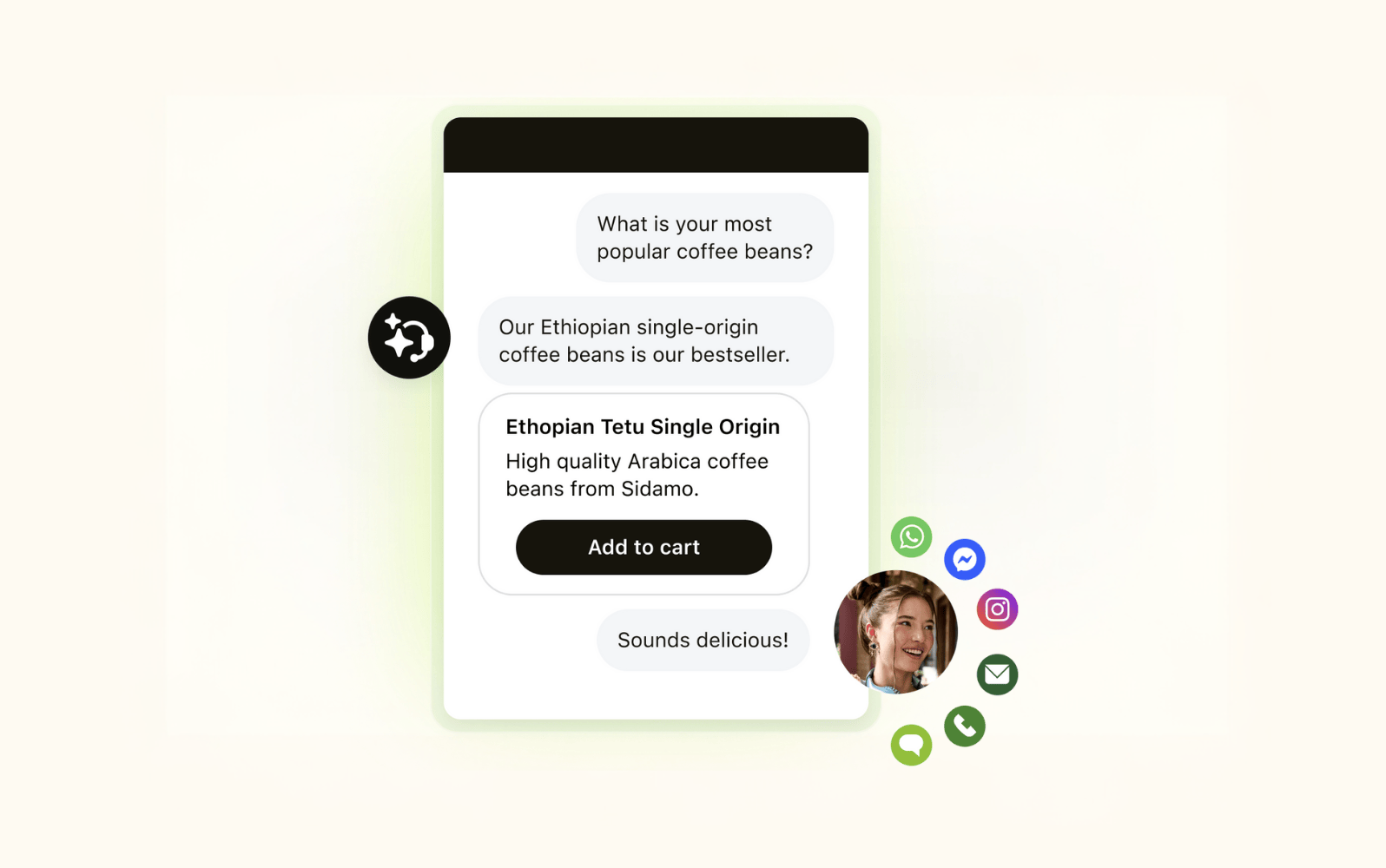
Learn more about Zendesk’s omnichannel support.
Zendesk’s mature platform combines agility and simplicity with out of the box capabilities. Every channel (email, chat, SMS, voice, WhatsApp, social messaging, and more) is a single, unified thread, allowing for a seamless experience. Agents can effortlessly handle conversations without jumping between platforms.
Salesforce offers omnichannel capabilities, but they’re usually spread across Service Cloud, Digital Engagement, and third-party apps. Agents often switch contexts, and admins spend time managing integrations instead of fine-tuning customer service.
Quality and workforce optimization
Zendesk includes native Quality Assurance (QA) and Workforce Management (WFM) so teams can evaluate performance, improve consistency, forecast demand, and schedule effectively. With tools like AutoQA, teams can easily monitor human and AI agent interactions—even in real time.
You don’t get native QA with Salesforce. WFM is available through Salesforce’s acquisition of ClickSoftware, but it's sold separately and requires additional setup. Organizations that want an all-in-one service platform choose Zendesk.
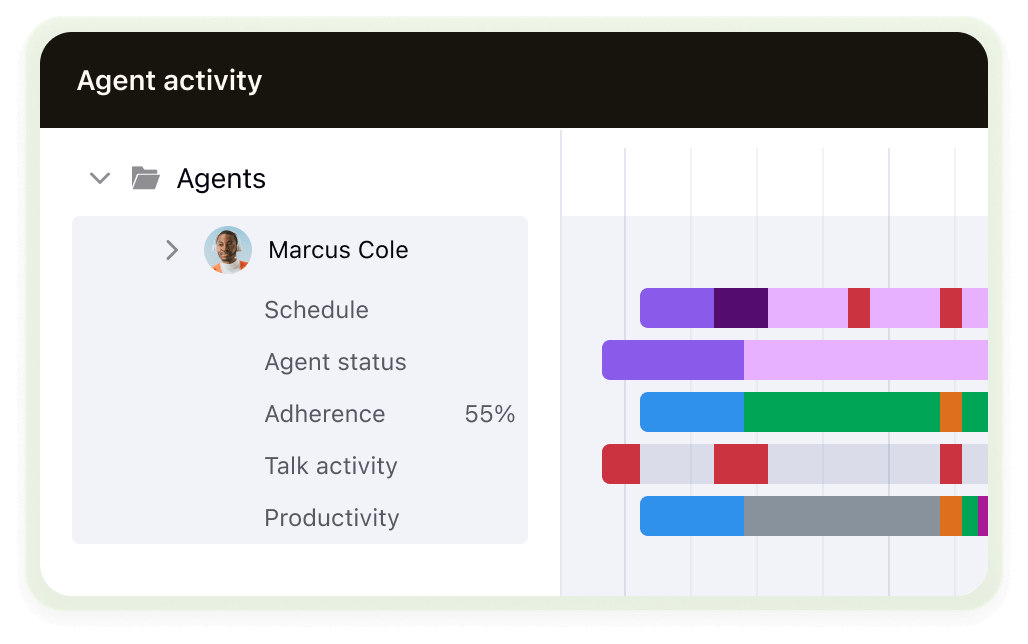
Discover Zendesk’s quality assurance and workforce management tools.
Total Cost of Ownership (TCO)
The true cost of Salesforce isn't just the license; it's the cost of the people required to maintain it. Implementation services, admin hours, and third-party tools add up fast.
With Zendesk, pricing is predictable and transparent. There are no dedicated admins required to get set up, no consultant dependencies, and no hidden add-ons. Because service leaders manage the platform directly, your organization spends less on overhead and more on your customers.
From Salesforce to Zendesk: The customer perspective
Companies from across industries are moving to the Zendesk Resolution Platform for its maturity, simplicity, and proven success in service.
Qualia
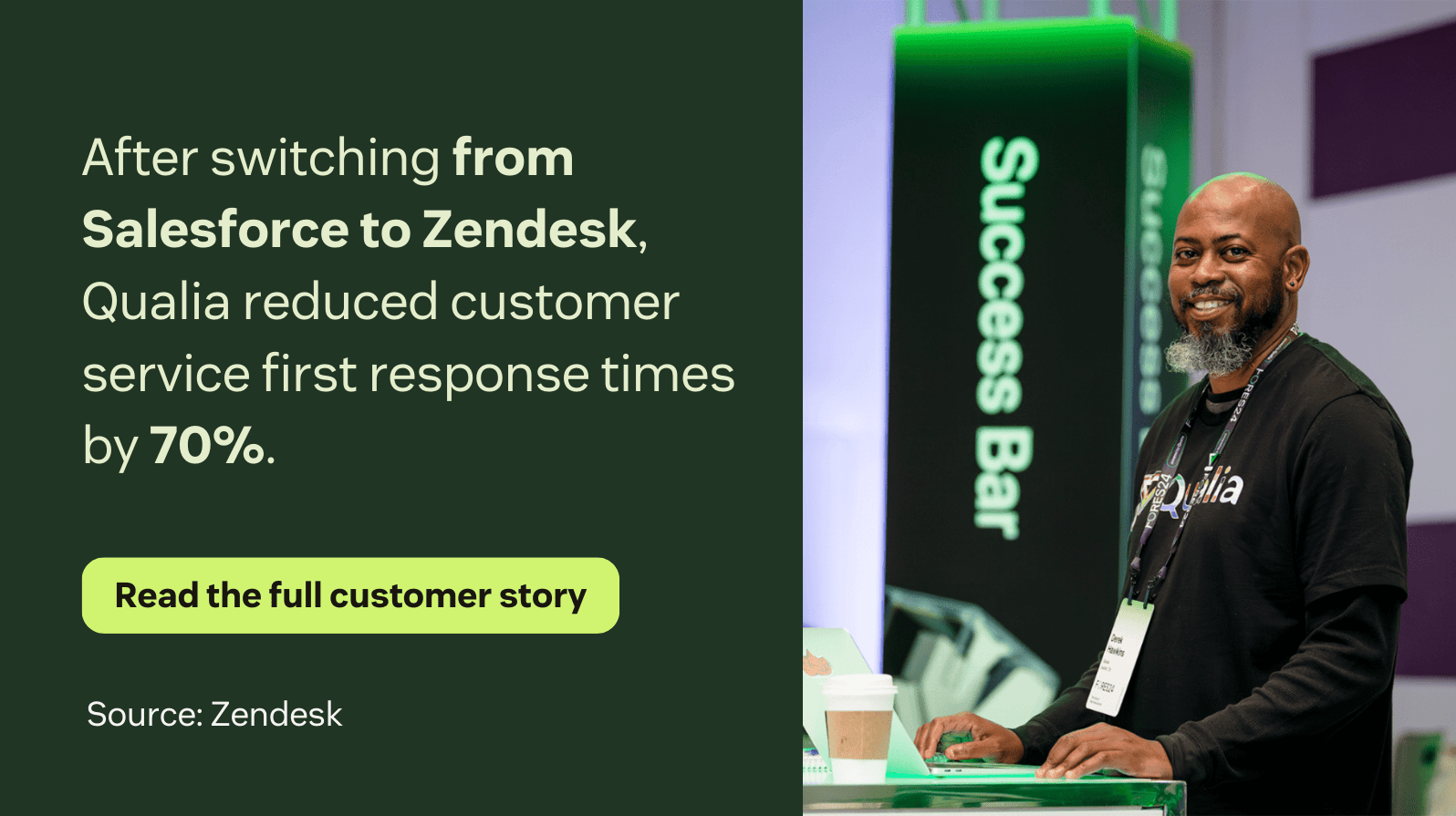
“Some of our data points, and the custom metrics and fields that would have taken us a lot of time to build, exist in Zendesk, out of the box. We don’t have to put any work into it.”
—Sarah Cullerton, Senior Customer Success Operations Analyst at Qualia
HealthJoy

“That combination of flexibility, integration, and control is exactly what makes Zendesk the most congruent product to support the needs of a mobile app or technology SaaS company—better than any other product on the market.”
—Jeff Gratton, Vice President of Member Services at HealthJoy
Mediaocean

“[Salesforce] had some strengths, but it was still complicated and incredibly expensive. Every time we turned around, there was another unanticipated customization or charge.”
—Stephanie Dorman, Chief Customer Officer at Mediaocean
Zendesk vs. Salesforce pricing
|
Zendesk |
Salesforce |
|
|
|
*Plans are billed annually. | |
Salesforce pricing seems competitive, until you factor in the true cost of ownership: add-ons, implementation services, ongoing admin headcount, third-party add-ons, and consulting fees for customization. Organizations may see costs 2-3x higher than their initial licensing. Before switching to Zendesk, Qualia’s technical debt in Salesforce Service Cloud had “accumulated from years of different admins building point solutions, and it was also paying more for all these separate tools.”
Zendesk has predictable plans that scale with your needs. Setup is fast, training is simple, and teams achieve a lower total cost of ownership without hidden taxes.
Frequently asked questions
Choose simplicity. Choose speed. Choose Zendesk.
Zendesk is built for teams that need to deliver resolutions as fast as possible. With a unified workspace, AI that works on day one, and zero consultants required to get you up and running, Zendesk saves you time and offers a low overall cost of ownership. And best of all, it's free to get started. Try it for yourself today.
Zendesk vs. the rest: Compare the software
Here’s additional information on Zendesk versus the competition to address any lingering questions.